

Hydrogen Practice Area
Hydrogen is the first practice area at SEP and was an outgrowth from our innovation reporting.
North America’s gray hydrogen market remains substantial, valued at roughly $150 billion today and projected to reach $300 billion by 2033, growing at a CAGR of about 8%. Current production is 12–15 million metric tons annually, contributing 2–3% of the region’s CO2 footprint. Clean hydrogen is the critical next step, unlocking decarbonization for mobility, steelmaking, industrial heat, and energy storage.
Momentum is strong, even as federal policy evolves. The One Big Beautiful Bill Act accelerated the phase-out of some clean energy credits, but key incentives remain: the Section 45V tax credit offers up to $3/kg for qualifying projects starting construction by 2027, and some DOE-backed hydrogen hubs such as in Appalachia and the Gulf Coast continue to advance. Global demand, state programs and private capital are stepping up, accelerating timelines and creating opportunities for agile players to lead.
At SEP, we help clients navigate this shifting landscape, turning complexity into clarity and positioning them to capture growth in the clean hydrogen economy.
Join Major Industry Players, Cutting-Edge Technology Startups & Key Research Organizations in SEP’s Hydrogen Data Consortium and gain exclusive access to the North American Hydrogen Market Model.
Also, check out our unparalleled daily H2 NewsFeed, global Supply Chain Database, upcoming Hydrogen Innovation Report, customized research for project analysis, and Events.
Explore The H2 Practice Area
Recent H2 News & Events




Hydrogen Data Consortium
SEP built the Hydrogen Data Consortium to develop and provide exclusive access to the Hydrogen Market Model. Members also have access to the global Hydrogen Supply Chain Database, Global H2 NewsFeed, pending Hydrogen Trade Flows data system, and Consortium communications, networking, and events such as the two annual invitation only events (Hydrogen Mountain Retreat and Hydrogen Trade Flows Roundtable).
The core purpose for the Consortium is to exclusively share the most comprehensive data and analysis to inform hydrogen-related demand and supply transactions (investments, production development, addressable markets, off-take projects, etc.) at the plant level.
Consortium membership is available at various levels and includes all or selected elements of the data systems to meet the needs of the members. Membership has created a community within which relationships are built, insights are gained and deals are driven.
Hydrogen Market Model
The online Market Model tracks thousands of assets at the plant level and provides an extensive range of analytical tools, search and sort features, and mapping. The sections of the Model include:
Market Demand - datatables and mapping for current, planned and potential demand facilities (with contacts for each plant)
Infrastructure - data tables and mapping covering H2, NG, CO2 and NH3 transmission pipelines, power transmission lines, power plants, renewable power curtailment, RNG production, and ports.
Site Design - locate, size, map and evaluate the economics, carbon intensity and supply/demand market profile for any planned hydrogen or hydrogen derivative production facility.
Merchant Supply - datatables and mapping for current and planned hydrogen production facilities (with contacts for each plant).
Mobility - tracks global orders for trucks buses, ships, material handling equipment, rail and aircraft. This section also provides a tracker for SAF current and planned production along with offtake commitments, alternative fuel stations, and a fleet tracker (H2, EV, CNG and LNG) for North America.
Geologic Hydrogen - presents global occurrences of H2 and He in oil and gas well completions over the past 125 years from peer reviewed sources, tracks all natural and stimulated geologic hydrogen projects and wells as a proprietary database, and captures all companies and investors with associated capital flows also in a proprietary database — all globally.
State Policies - tracks passed legislation in all U.S. states that relate to regulations, incentives and requirements for hydrogen production, transport, storage and use.
CO2 Tracker - covers all CCUS projects and CO2 pipelines (operating and planned), CO2 fossils and biogenic point sources, and Class VI well applications and permits - for the U.S.
Solid Carbon Markets (pending for Q4 2026) - tracks all producers, intermediaries and end-users for solid carbon materials such as carbon black, graphite, graphene, CNTs and others for North America. In addition, this sector covers all methane pyrolysis companies globally and trade flows of solid carbon materials into/out of North America.
Forecasting - forecasts new hydrogen and derivatives (ammonia, methanol and SAF) production by 2030 by technology pathway and confidence interval. This system also provides for bespoke market forecasts and contrasts that output with leading forecasts by U.S. DOE and others.
For each asset, the location, hydrogen demand and supply relationship, GHG footprint, underlying product production, ownership, contacts and additional information is tracked. The data collected is updated regularly and presented in an interactive format for ready access with information that can illuminate, analyze and drive transactions. The Hydrogen Trade Flows Initiative data system is in development to connect global demand for hydrogen and its derivatives at the port level with ship orders and North American (and global completing) supply.
Customized Research
SEP also provides research support in the hydrogen space, including project analysis, company and technology due diligence and overall industry positioning evaluations. Learn more about our Tailored Engagement Services.

Global Hydrogen Supply Chain Database
All the key startups and large companies that are offering or have announced hydrogen-related products or services are tracked in the Supply Chain Database. This includes 3,000+ companies that provide hydrogen-related products and services. Datasets include 8,000+ contacts for the companies. All US H2Hubs applicants and their members are tracked. Soon this database will include cross reference of all H2Hubs projects with all announced hydrogen production and demand projects for the US. This database is currently only available to Hydrogen Data Consortium members.
Upcoming Events
SEP holds in-person and virtual events related to its Hydrogen Practice Area. Members of the Hydrogen Data Consortium, other clients of this practice area, sponsors, startup cohort members, and special guests have access to bi-monthly private webinars, connecting-the-dots campaign and two annual invitation only events.
The next events include:
Hydrogen Trade Flows Roundtable - Yokohama, set for October 13, 2026.
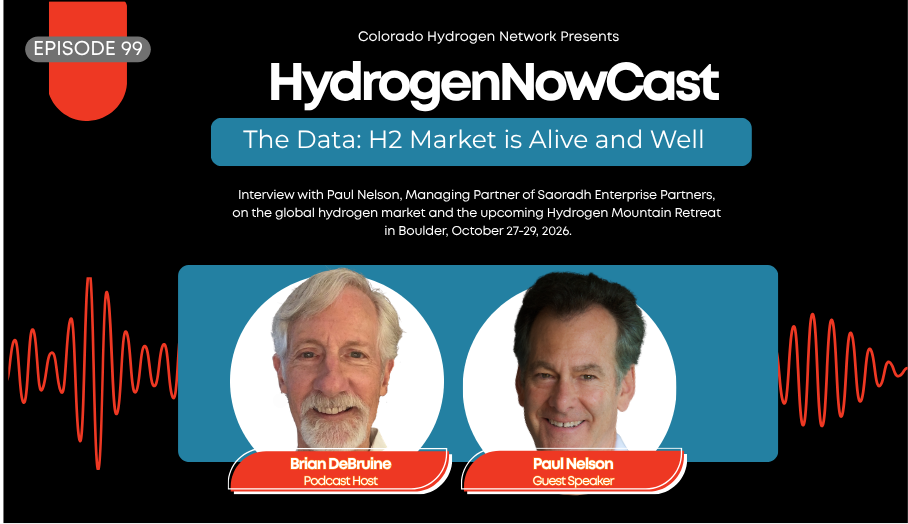
Third Annual Hydrogen Mountain Retreat - Boulder, set for October 27-29, 2026.
Second Annual Hydrogen Trade Flows Roundtable - Houston, to be scheduled during CERAWeek in March, 2027.
recent events
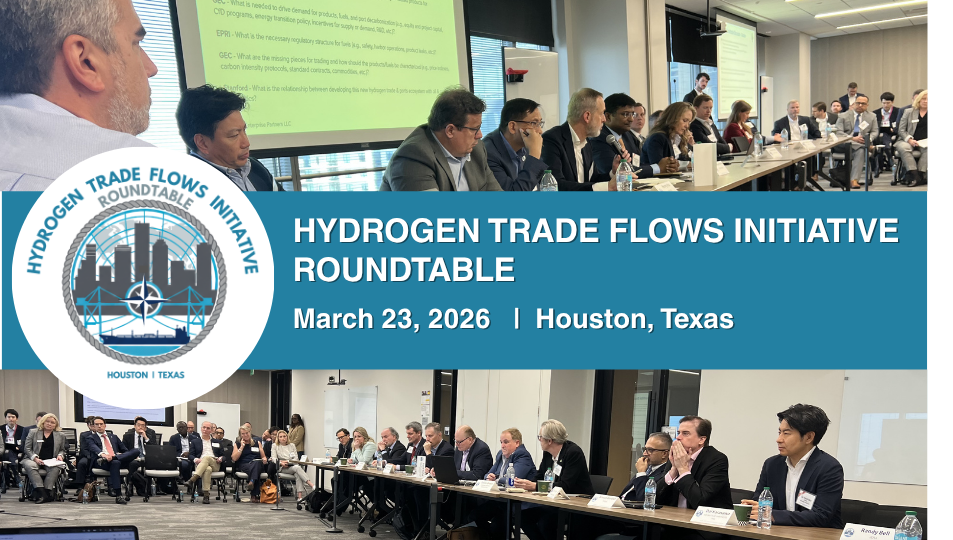
HOUSTON, March 2026
SEP’s inaugural Hydrogen Trade Flows Roundtable held during CERAWeek at the EY offices in downtown Houston and attended by global companies, key startups, port authorities and government agencies from the U.S., Western Europe and Japan. This event was co-hosted by the Gulf Energy Catalyst, EPRI and Stanford University.

EVENTS BACKGROUND
Clean hydrogen has become critical for the global energy transition to reach net zero by 2050, especially for hard to abate sectors ranging from industry to heavy duty mobility. The field is expanding rapidly, with many market opportunities and challenges. The imperative before us is to transition the current market to clean hydrogen and identify new uses to reach as much as 80+ billion metric tons by 2050—more than a 5x increase.
If you would like to explore how to participate in an SEP event, please contact us at info@saoradh.com.